
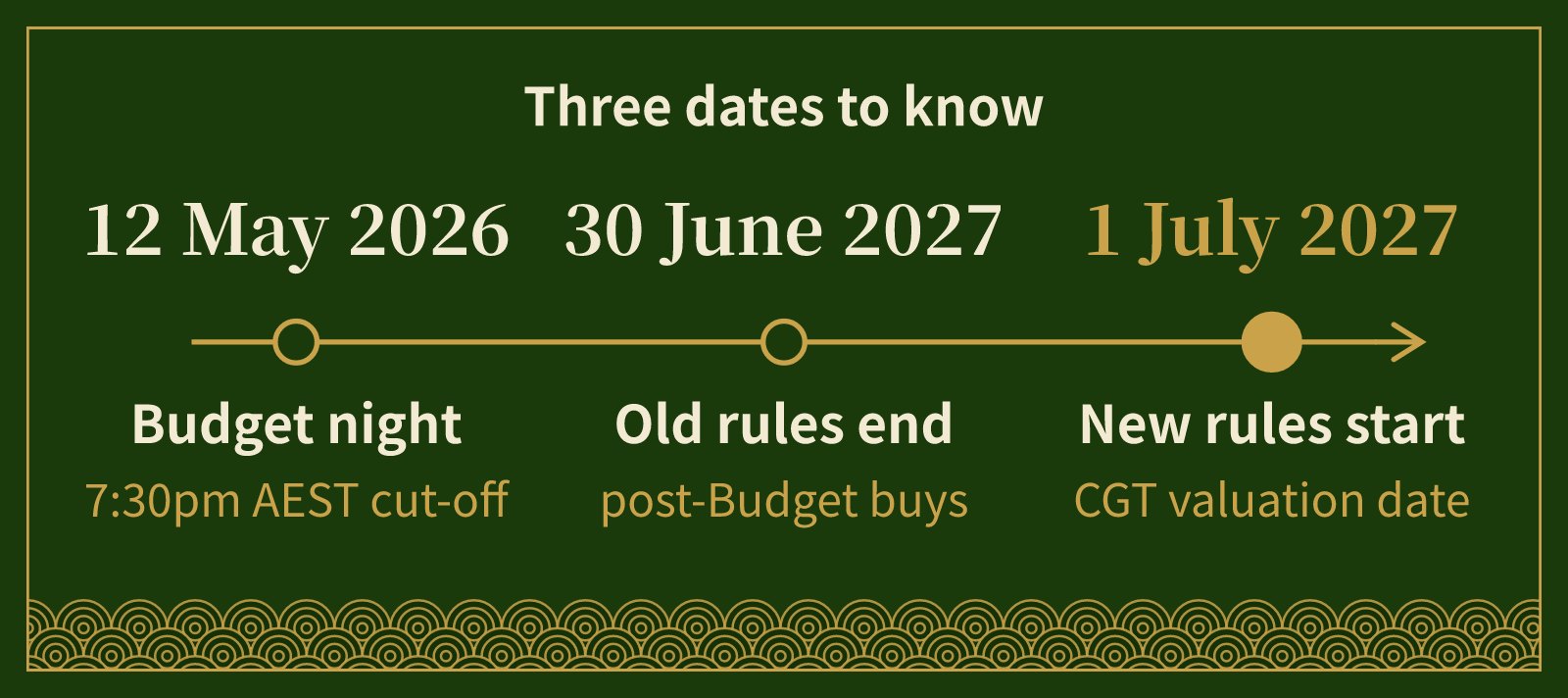
The negative gearing and capital gains tax (CGT) changes announced in the 2026–27 Federal Budget on 12 May 2026 are now law, and they start on 1 July 2027. For many Brisbane families who own an investment property, the key question is simple: which group does my property fall into, and is there anything I should do before the new rules start?
Which group is your property in?
The negative gearing changes apply to residential property. How they affect you depends mainly on when you bought and what you bought.
| Your situation | Negative gearing (rental losses) |
|---|---|
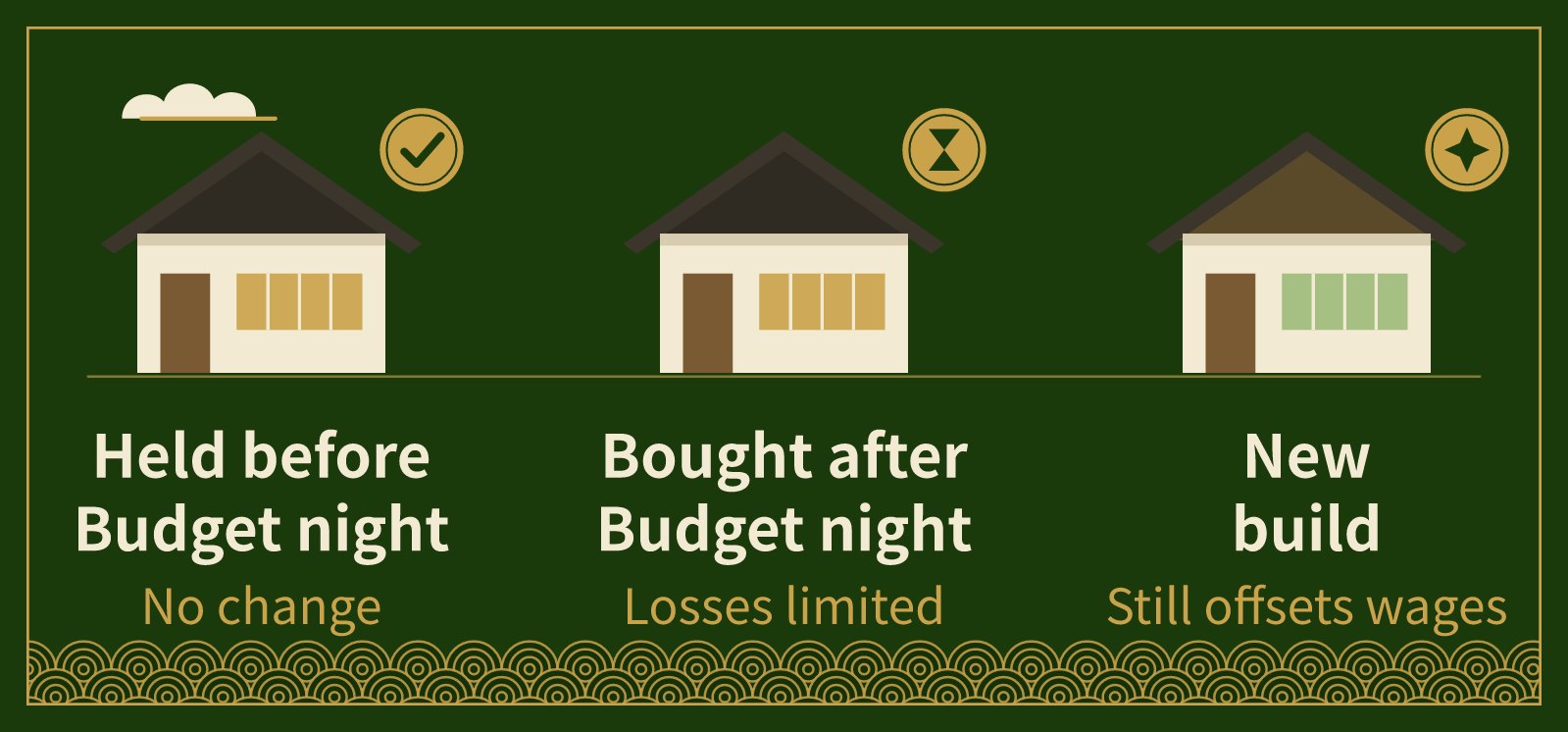
| Held before 7:30pm AEST, 12 May 2026 (including contracts signed but not yet settled) | No change. You can keep offsetting rental losses against your salary and other income until you sell. |
| Established property bought after Budget night | Losses can be offset against other income only until 30 June 2027. From 1 July 2027, losses can only offset residential property income (including residential capital gains). Unused losses are carried forward. |
| Eligible new build | Losses can still be offset against salary and wages. |
Under the Budget explanation, a new build generally means a dwelling built on vacant land, or a knock-down rebuild that adds to the number of dwellings. A renovation or a rebuild that doesn't add dwellings doesn't count.
What changes for capital gains tax
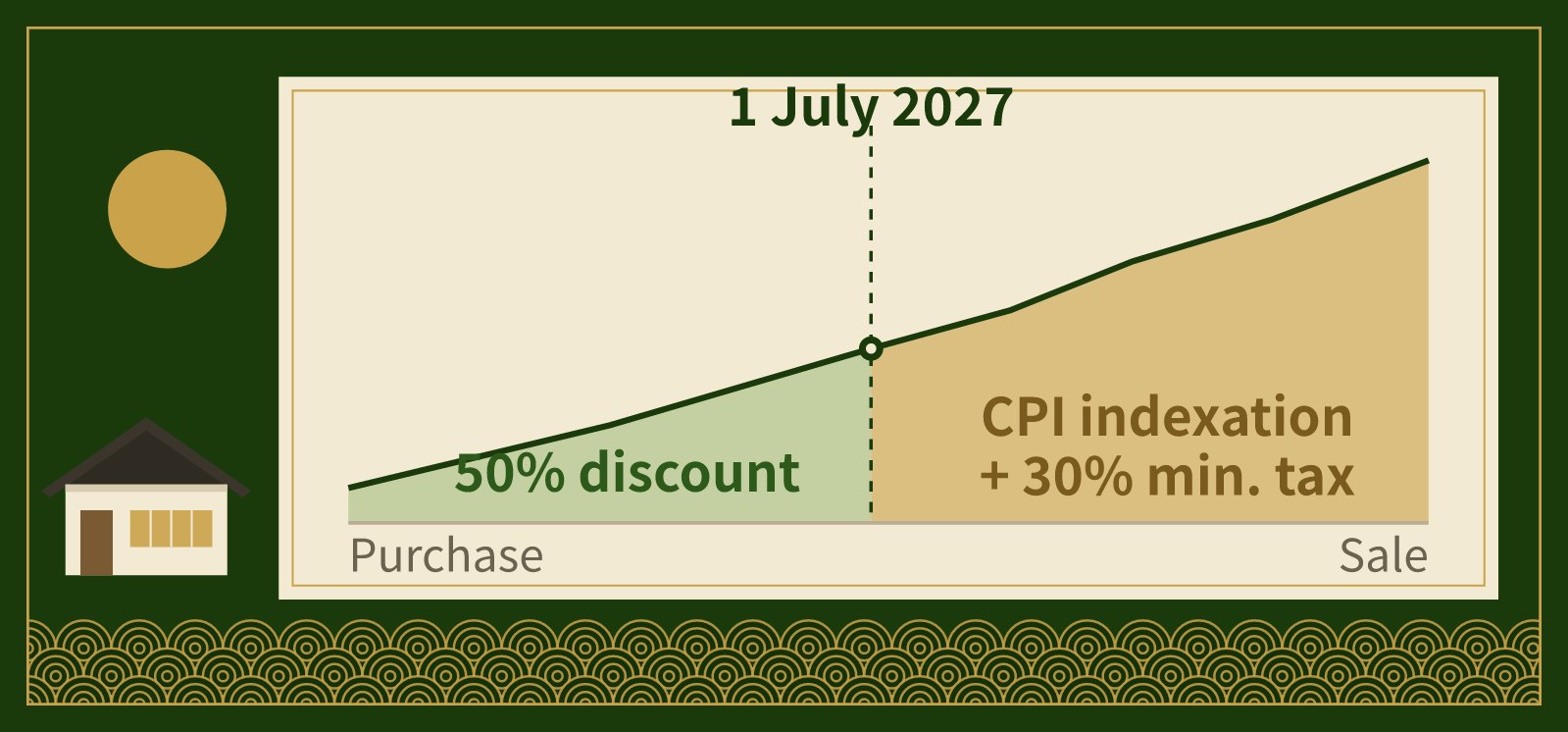
From 1 July 2027, the 50% CGT discount for individuals, trusts and partnerships is replaced by indexing the cost base to inflation (CPI) for assets held at least 12 months, together with a 30% minimum tax on real capital gains. The minimum tax doesn't affect people who are already taxed at 30% or more.
The change is not retrospective. For an asset you already own, the gain up to 1 July 2027 still gets the 50% discount, and only the gain after that date is taxed under the new method. Investors in eligible new builds can choose either the 50% discount or the new method when they sell.
The value of your property on 1 July 2027 matters. To split the gain before and after that date, you will be able to either get a formal valuation as at 1 July 2027 or use an ATO apportionment formula based on growth over your holding period.
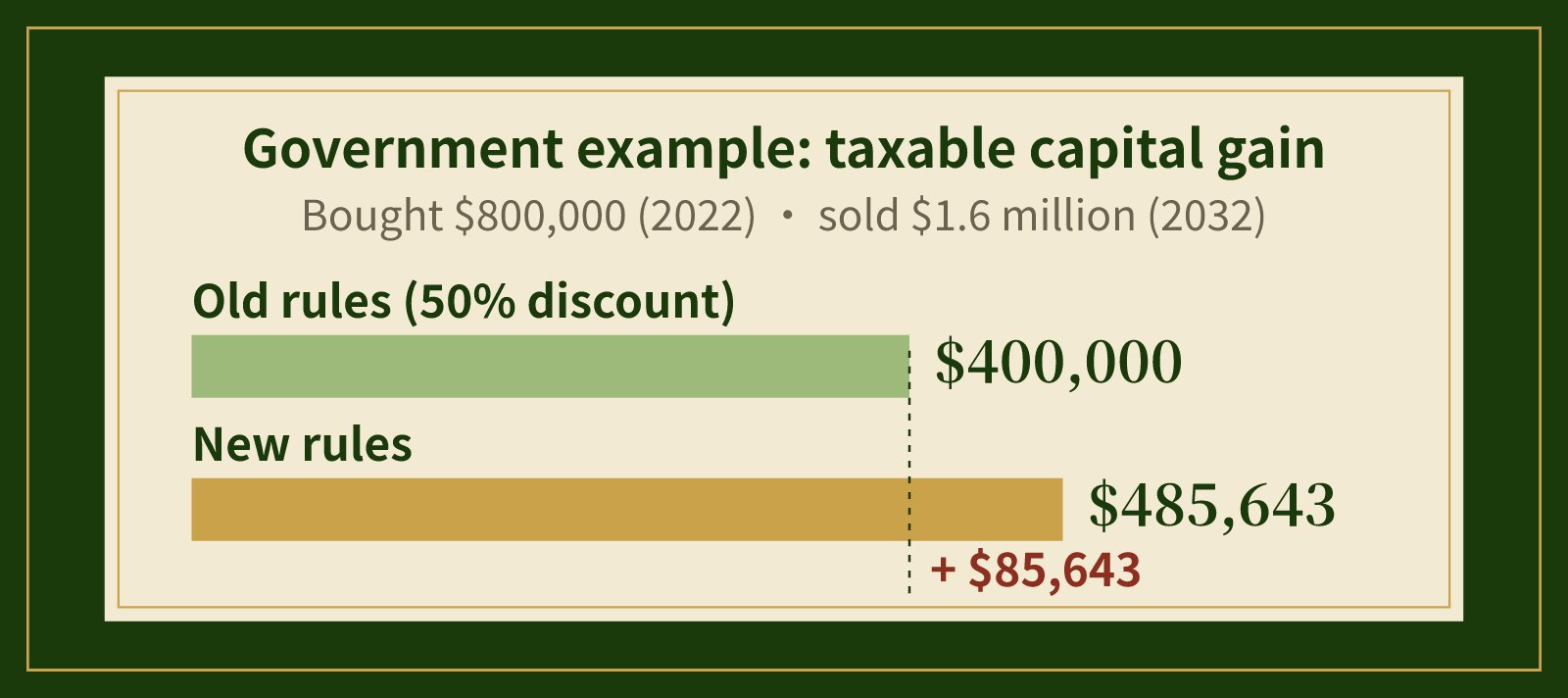
In one of the Government's own examples, a property bought for $800,000 in 2022 and sold for $1.6 million in 2032 has a taxable gain of $485,643 under the new rules, compared with $400,000 under a 50% discount. Every situation is different, but it shows why the split at 1 July 2027 is worth planning for.
What is not changing
- The main residence exemption for your own home is unchanged.
- Commercial property and shares are not affected by the negative gearing changes.
- Self-managed super funds (SMSFs) are excluded from the negative gearing changes.
- The small business CGT concessions are unchanged.
Some details are still being finalised
In August 2026, Treasury consulted on a second set of draft laws. They cover the detailed definition of a new dwelling, joint ownership, property acquired through inheritance or a separation, and the method for apportioning gains around 1 July 2027. Further legislation is expected, so check the final rules before you make a decision based on them.
A checklist before 1 July 2027

- Find the contract date for each investment property and check whether it was before or after 7:30pm on 12 May 2026. Keep a copy of the contract.
- If you bought an established property after Budget night, plan your cash flow on the basis that rental losses from 2027–28 may be carried forward rather than reducing your tax each year.
- Put 1 July 2027 in your diary. For a property that has grown a lot in value, consider whether a formal valuation on that date would give a better result than the ATO formula.
- Gather your cost base records now: purchase contract, stamp duty, legal fees and receipts for capital improvements.
- If you're thinking of buying, remember that a new build and an established property are now taxed differently.
- Don't sell or restructure just because of the tax change. Selling costs and stamp duty on a new purchase can outweigh any saving, so get advice for your own situation first.
How we can help
LYI Accountants is a registered tax agent based in Sunnybank, Brisbane. Property and CGT questions depend on your own circumstances, so fill in our online form, or contact us by phone or email, and one of our accountants will go through your situation with you.
Sources
- ATO — Tax reform: boosting home ownership, reforming negative gearing and capital gains tax
- Budget 2026–27 — Tax explainer: negative gearing and capital gains tax
- Budget 2026–27 — Tax reform
This article is general in nature and does not constitute tax or financial advice. Individual circumstances vary — please consult one of our registered tax agents for advice specific to your situation.